


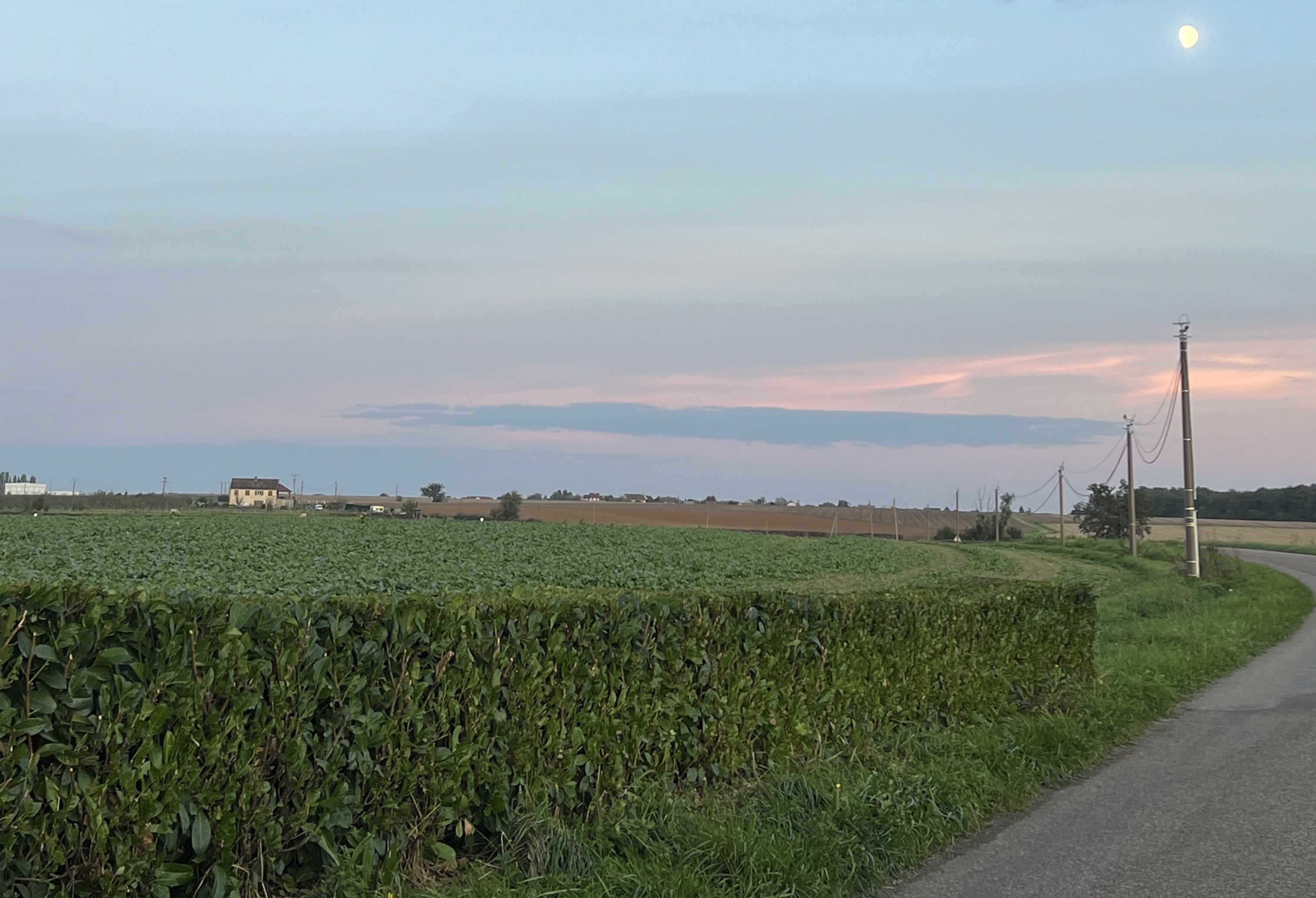
Ludwig’s bar was never open when you needed it to be, although it typically was on Tuesdays as the sun set and on Wednesdays after the market had closed. On some weekends, as well, but not every weekend. Never at midday nor on Sundays. Sometimes on Mondays but only if it wasn’t raining. The wine shop across the street that Ludwig owned with his business partner had a similar unreliability. Which was fine since mostly I bought my wines from that bottle shop in Beaune, the one with producers I’d heard of through industry friends or read about in one of those rare online articles that talked about natural wine in an unironic way.
There were certain things I could count on Ludwig’s for, however. That it was a thirty second walk from my apartment was one. Or that their wine would be something local, never more than five euros a glass, and that their cheese plate for one would be more than enough food for a full meal. I could also always count on Ludwig to welcome me warmly and with a sarcasm that was easy to grasp despite the language barrier between us. A few days after I’d arrived in Burgundy, on a night when Ludwig’s was open, I went to have a drink with my book–I was reading, at the time, the Bee Sting, which is very good and that I highly recommend. I took a seat outside, at one of the makeshift tables made from a thin wooden plank laid over an old oak barrel and perched myself in a plastic folding bar stool while I waited for Ludwig to come by and take my order.
Ludwig emerged some time later to see what I wanted and when I asked if he had a Pinot Noir, he began to laugh an earnest, head to toe kind of laugh that revealed his missing front teeth. He then pointed to the section of reds listed on the menu, scribbled in white chalk across a board which he had propped up in front of me, and pointed to each as if he were giving an arithmetic lesson. Pinot Noir, Pinot Noir, Pinot Noir. And one Gamay. Because that’s the thing about red wine in Burgundy: it’s almost always Pinot Noir. Ask for Chardonnay, and you’d get the same reaction—because white wine in Burgundy is almost always Chardonnay. My question was, to Ludwig, essentially rhetorical, so he simply poured me a glass of his personal favorite, which tasted like the cherries I’d had that morning for breakfast.
From then on, my evenings at Ludwig’s were something I looked forward to and I returned often in the few months I lived in Chalon-Sur-Saône. It was as if on that first night, the ice had been broken, winter had receded, a new leaf had turned. I would come for a single glass, order it by color alone–either red or white–and leave change on the table when I was finished, returning home in time to make myself a dinner of cheese and bread and salad. I never did catch the details of any of those wines I drank, the names of their producers, their vintages or their appellation. And that was okay. I drank a lot of wine that spring–on visits with vignerons and at wine salons and on Saturdays at Creme Café in Beaune–and in every glass I learned something new. Ultimately it was the season I spent in Chalon that I became particularly attuned to the rhythm of Burgundy’s wines–how its red and whites, most often from a single varietal, could express themselves in a thousand different ways. The following is a guide to drinking Burgundy, to appreciating its simplicity and navigating its vastness in equal measure.
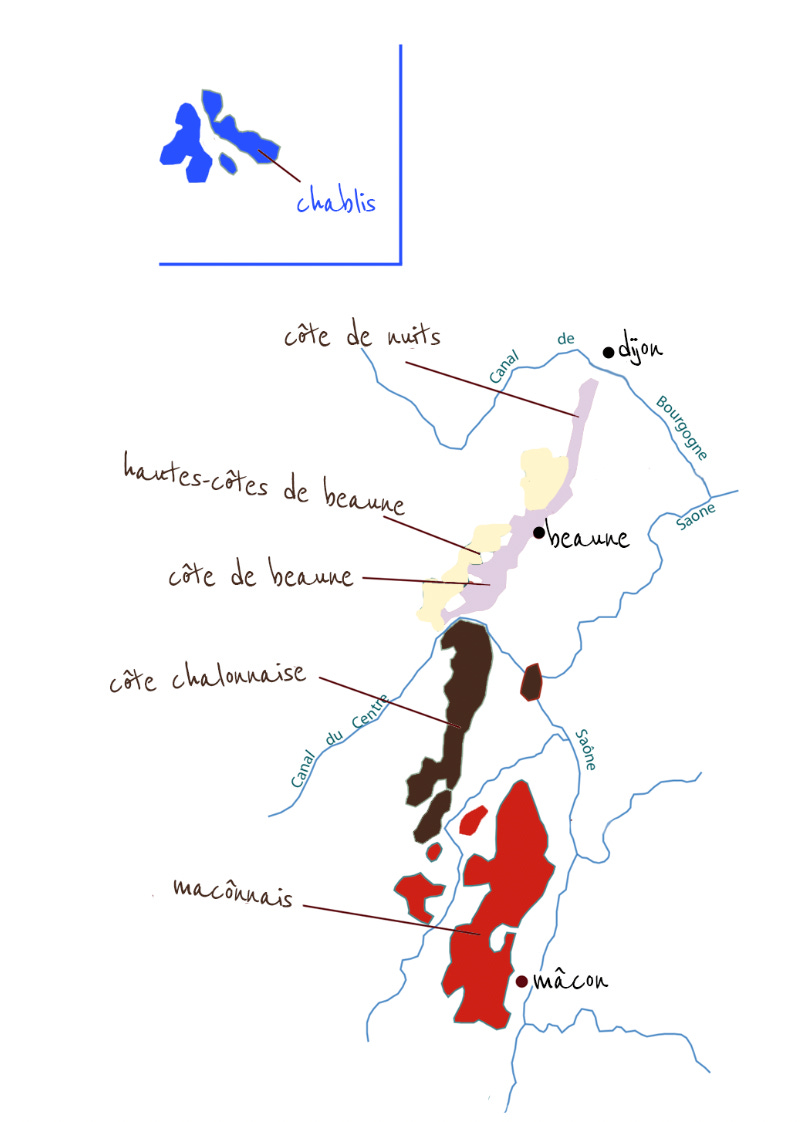
One practical note: Burgundy is a region that’s not only sprawling, but is of incredible history, constant evolution, and endless change. It’s true that you could spend a lifetime exploring its depths without ever even scratching the surface. Winemaking itself in Burgundy is only a small fraction of the larger region by the same name. Generally speaking Burgundy refers to an area in central-eastern France spanning roughly 12,200 square miles. In wine, however, it concerns only a narrow strip tracing the slopes of the Saône Valley—named for the Saône River—which stretches from Dijon in the north (with Chablis standing apart to the northwest) down to the city of Mâcon in the south.
What follows, then, is an effort to narrow Burgundy, to make it more digestible, to find ways to consume the region and its wine in small sips. To learn the language of Burgundy in order to to know what to look for when ordering a glass or buying a bottle at a wine bar or shop, knowing that any attempt to “define” it would be an exercise in futility.
General Wine Vocabulary
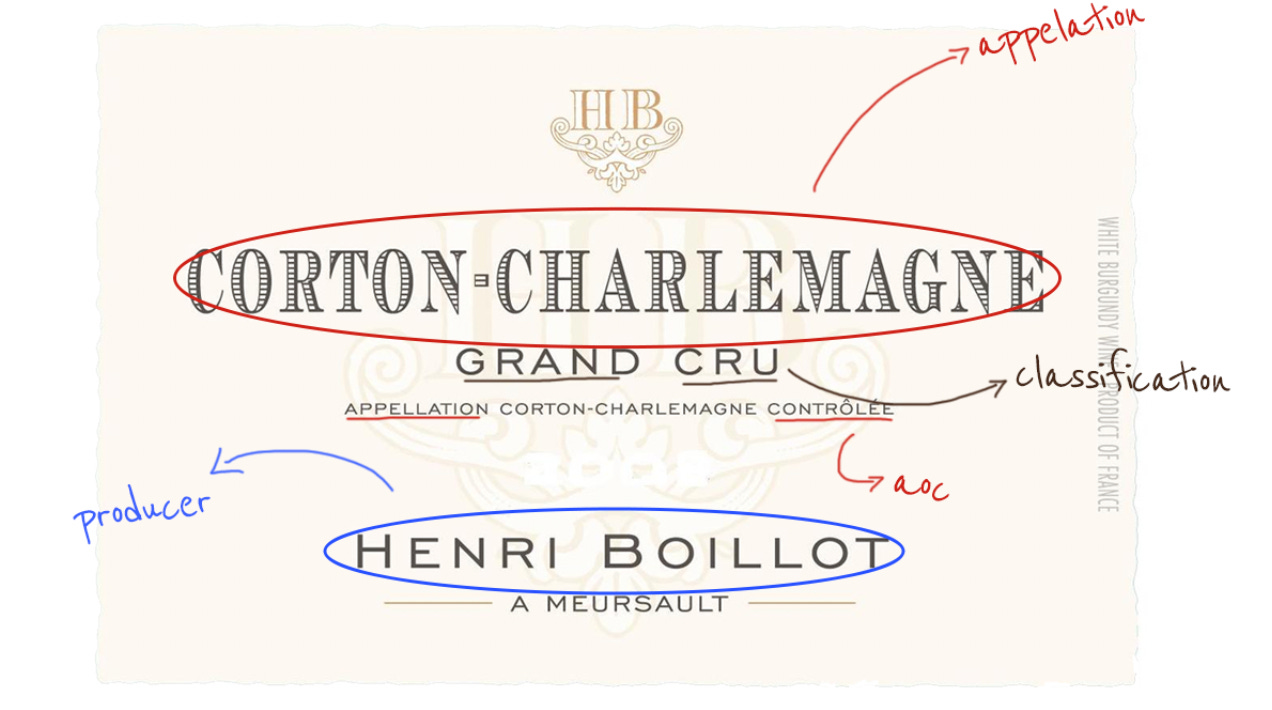
Appellation - a defined geographical area within a larger region that is designated for the production and marketing of wine, often with specific regulations on grape varieties, production methods, soil types, or aging minimums (In French, these are called AOCs, Appellation d’Origine Contrôlée)
Lieu-dit — literally meaning ‘named place,’ it refers to a specific vineyard plot recognized for its unique terroir. While not always classified with a cru status, a lieu-dit often has historical or qualitative significance that sets it apart from neighboring parcels
Terroir - translating to earth or soil, it captures all of the facets of a wine’s unique origin, including the region, soil, altitude and climate of an area
Clos –french for “closed” or “enclosure,” it refers vineyard site originally enclosed by stone walls, often dating back to monastic times
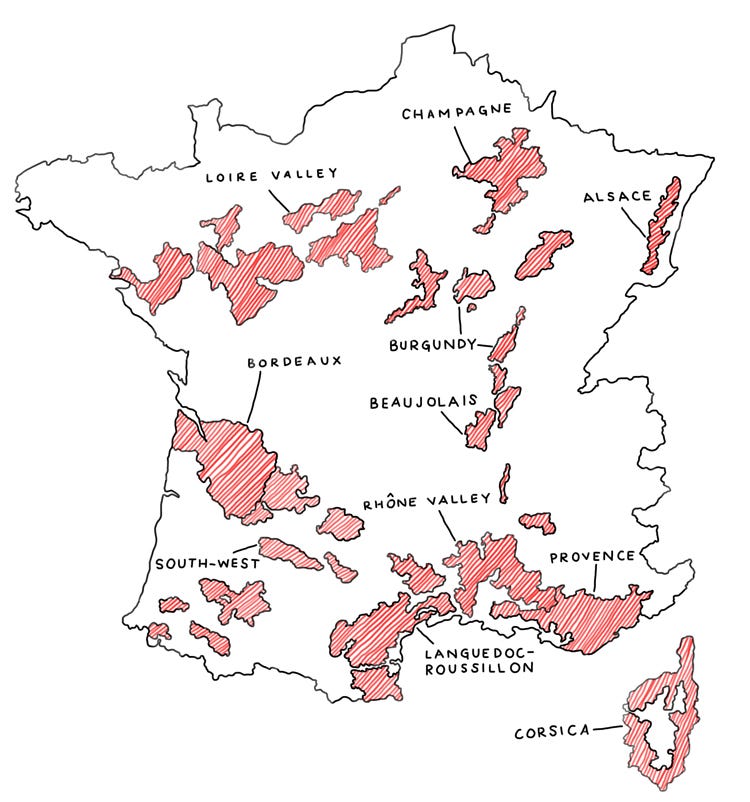
Grapes
Red Wines
Pinot Noir: Pinot Noir grows all over the world, but to have Pinot Noir from Burgundy is to ruin, if only slightly, the experience of drinking Pinot from anywhere else. Here, it is at its pinnacle, light to medium-bodied, with low to moderate tannins and bursting with flavors or red fruit and earth. Because of Burgundy’s cool to moderate climate, its Pinot Noirs tend to have brighter acidity and flavors of red fruits like sour cherry, red currant, cranberry, and raspberry. Many also express a distinct minerality, attributed to the region’s limestone-rich soils, along with earthy, forest-floor, and sometimes herbal or floral notes. Depending on how it’s aged, it can also have notes of vanilla and nutmeg.
Gamay: Gamay was my gateway wine–the first wine I ever had that opened my eyes to the possibility of wine. It’s light-bodied and incredibly juicy, bursting with notes of red fruits like strawberry, raspberry, and sour cherry and they tend to have a vibrant acidity and a stony, flinty minerality. While in Burgundy, Gamay accounts for only 3-4% of wine production, and is most often used as a filler grape in blends, it has no doubt shaped the history of red wine in the region.
Gamay, was banned in the Côte d’Or by the Duke of Burgundy in the late 14th century, who considered it inferior to Pinot Noir, it pushed southward toward the fringes and grown in abundance throughout Beaujolais, which is technically within the boundaries of Burgundy’s southernmost parts, although often regarded as its own, distinct region.
White Wines
Chardonnay: We often receive people at the wine bar where I work telling me they don’t like Chardonnay. And although I understand where the sentiment comes from–we’ve all been burned by a buttery, oaky, Chardonnay in our day–I always implore guests to try European Chardonnay and specifically, if they can, Burgundy Chardonnay, which is, to say the least, the grape at its best. Offering notes of green apple, lemon peel, wet stone, and chalk, it is both crisp and gentle, bright yet round, fruit-driven with obvious minerality. In Burgundy, Chardonnay accounts for roughly 55% of all vineyard plantings across the region. It is often fermented in stainless steel or old oak, shaping wines with subtle expressions of almond and honey rather than adding any overpowering flavor or texture.
Aligoté: Less than 7% of all vines in Burgundy are dedicated to Aligoté, as the grape is permitted in only a limited number of appellations. However, it’s gaining renewed popularity among winemakers—not only because its expression is often playful and refreshing, but also because the grape itself is more robust and less susceptible to frost and disease than Chardonnay. The first time I had Aligoté it was fermented as a pet nat–a type of sparkling wine–which served only to accentuate the parts of Aligoté that are so wonderful: its searing acidity, notes of green apple and lemon, the way it dances a bit on your tongue.
Others: Pinot Gris, Sauvignon Blanc
Sub-Regions
Chablis: The northernmost sub-region of Burgundy, set off to the west on the border of Champagne, Chablis only produces Chardonnay and is known for its clean, crisp, white wines that are typically light in body, high in acid and distinctive for their chalky minerality.
Kimmeridgian Soils: The mineral rich soils that make Chablis distinctive, it’s made from limestone, clay, and fossilized sea life that contributes to the wines signature salinity or flint-like, mineral taste.
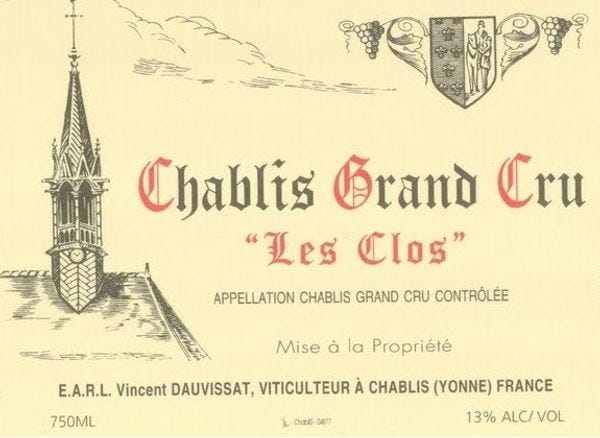
Famous Chablis Grand Cru Vineyard Sites
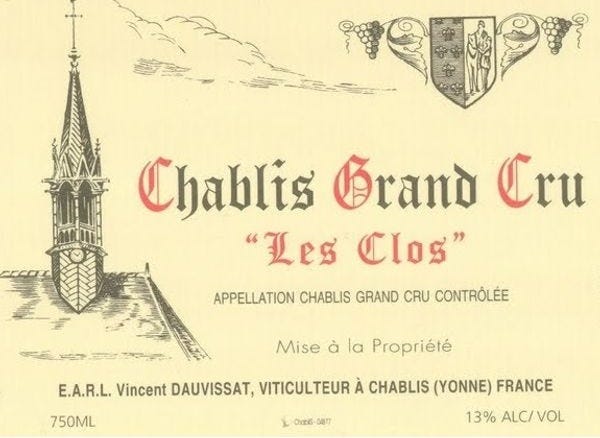
Les Clos
Blanchot
Bougros
Grenouilles
Preuses
Valmur
Vaudésir
Petit Chablis: typically from vineyards on the outskirts of the Chablis that are located on the higher slopes and plateaus, where temperatures tend to be colder and the soil type—called Portlandian—is different. These wines tend to be lighter and subtler, with gentle citrus and white flower notes. These are the wines you open for dinners with distant relatives, whereas high quality Chablis is what you might drink at an intimate celebration with friends for a new job or long overdue breakup.
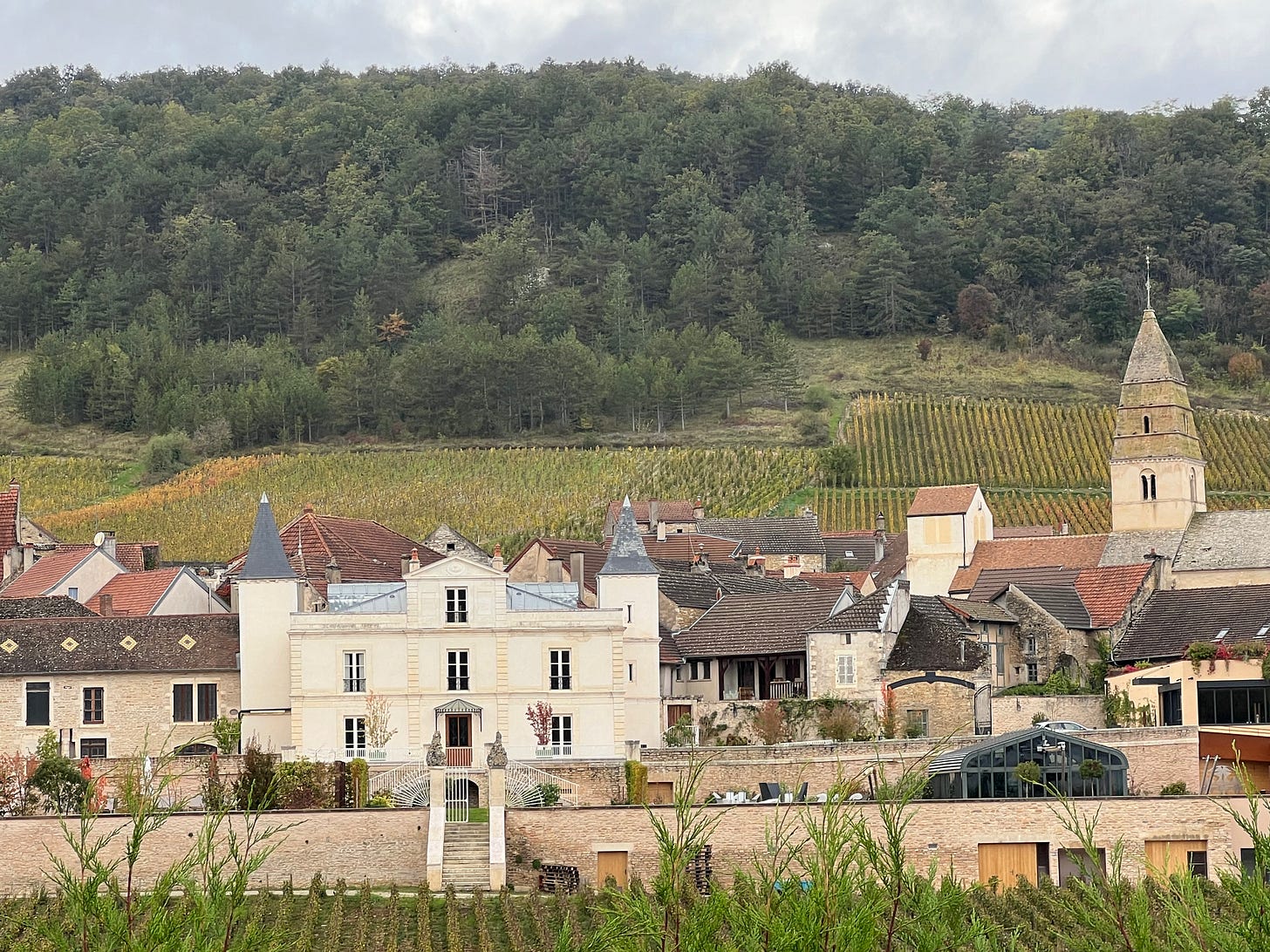
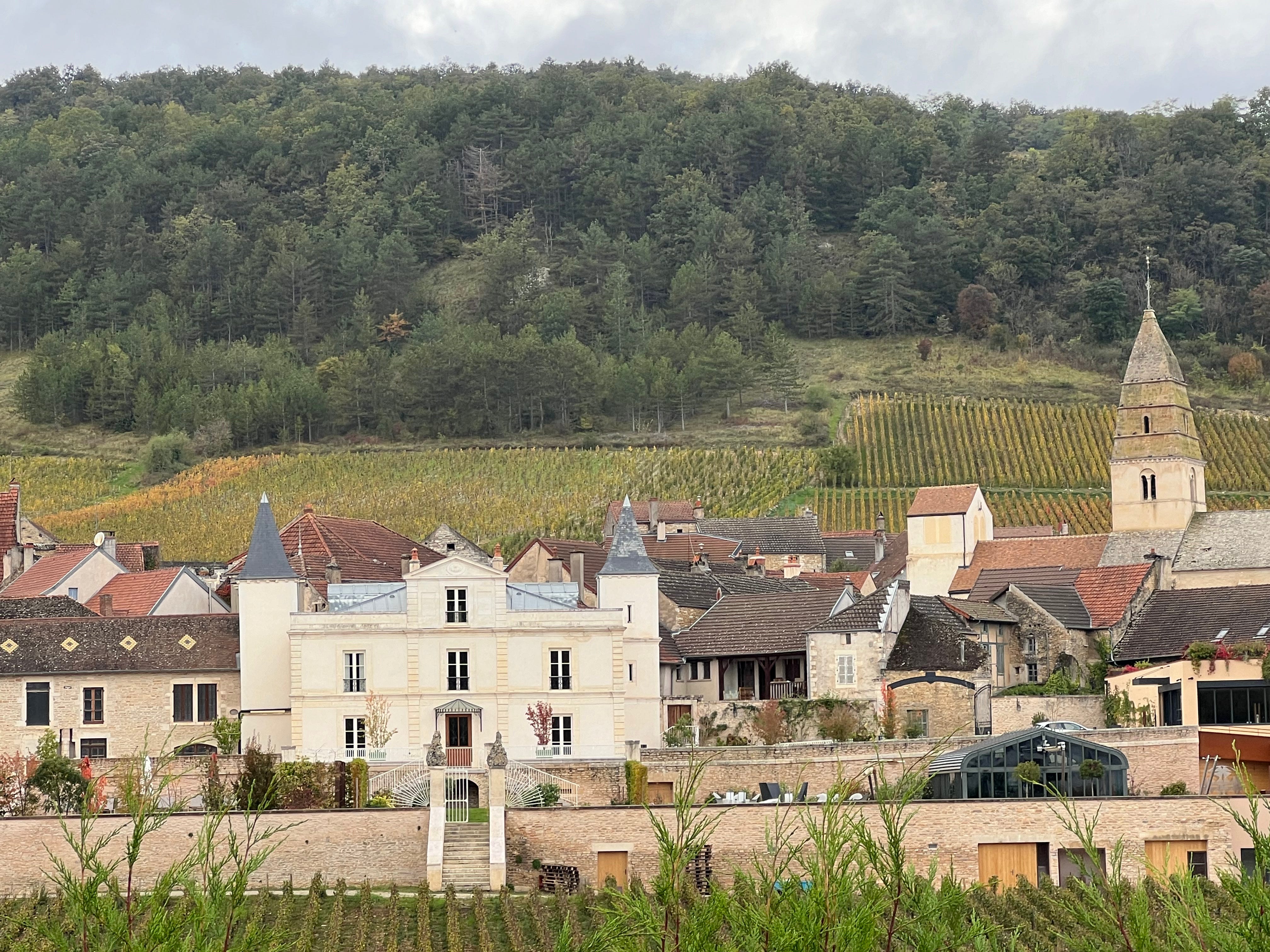
saint-aubin in late fall Côte d’Or: Translating to “Golden Slope,” the Côte d’Or refers to the heart of northern Burgundy and gets its nickname from the stretch of weeks in late fall, just after harvest ends, when the entire landscape takes on the color of autumn, with incandescent hues of yellow and gold. And it’s true that there is a richness to the Côte d’Or and its wine that’s not to be overlooked. It encompassing two of the region’s most prominent subregions—the Côte de Nuits and the Côte de Beaune—boasting an abundance of Premier and Grand Cru vineyards.
Côte de Nuits: the top half of the Côte d’Or, it is best known for its high concentration of Grand and Premier Cru vineyards, and its terroir driven red wines
Hautes-Côtes de Nuits: translating to “high slopes,” the Côte De Nuits is home to certain high-elevation peaks that running parallel to the appellation’s primary vineyards.
Famous appellations:
Gevrey-Chambertin
Morey-St-Denis
Chambolle-Musigny
Vougeot
Vosne-Romanée
Nuits-St-Georges
Côte de Beaune: named for the center city of Beaune–the true heart of Burgundy’s wine scene–the Côte de Beaune encompasses the surrounding villages and vineyards in the southern part of the Côte d’Or.
Hautes-Côtes-de-Beaune: “high slopes of Beaune” known for their bright expressions of Pinot Noir and Chardonnay, that are often considered to be good value wines. Vines are planted between 290 and 500 meters above sea level at the base of a limestone cliff, and are governed by a strict set of regulations pertaining to quality—wines that do not pass the strict test are labeled as Bourgogne or regional wines.
Famous appellations:
Corton
Corton-Charlemagne
Beaune
Pommard
Volnay
Meursault
Puligny-Montrachet
Saint-Aubin
Chassagne-Montrachet
Côte Chalonnaise: Often the most overlooked sub-region in Burgundy, it is also the one that holds a special place in my heart after spending some months in its central city of Chalon-Sur-Saône. It’s best known for its relatively affordable white wines–although its Pinot Noirs are lovely as well–which tend to be more fruit forward and highly concentrated than their regional counterparts.
Famous appellations:
Bouzeron–the sole Aligoté-only appellation in Burgundy
Mercurey
Rully
Givry
Montagny
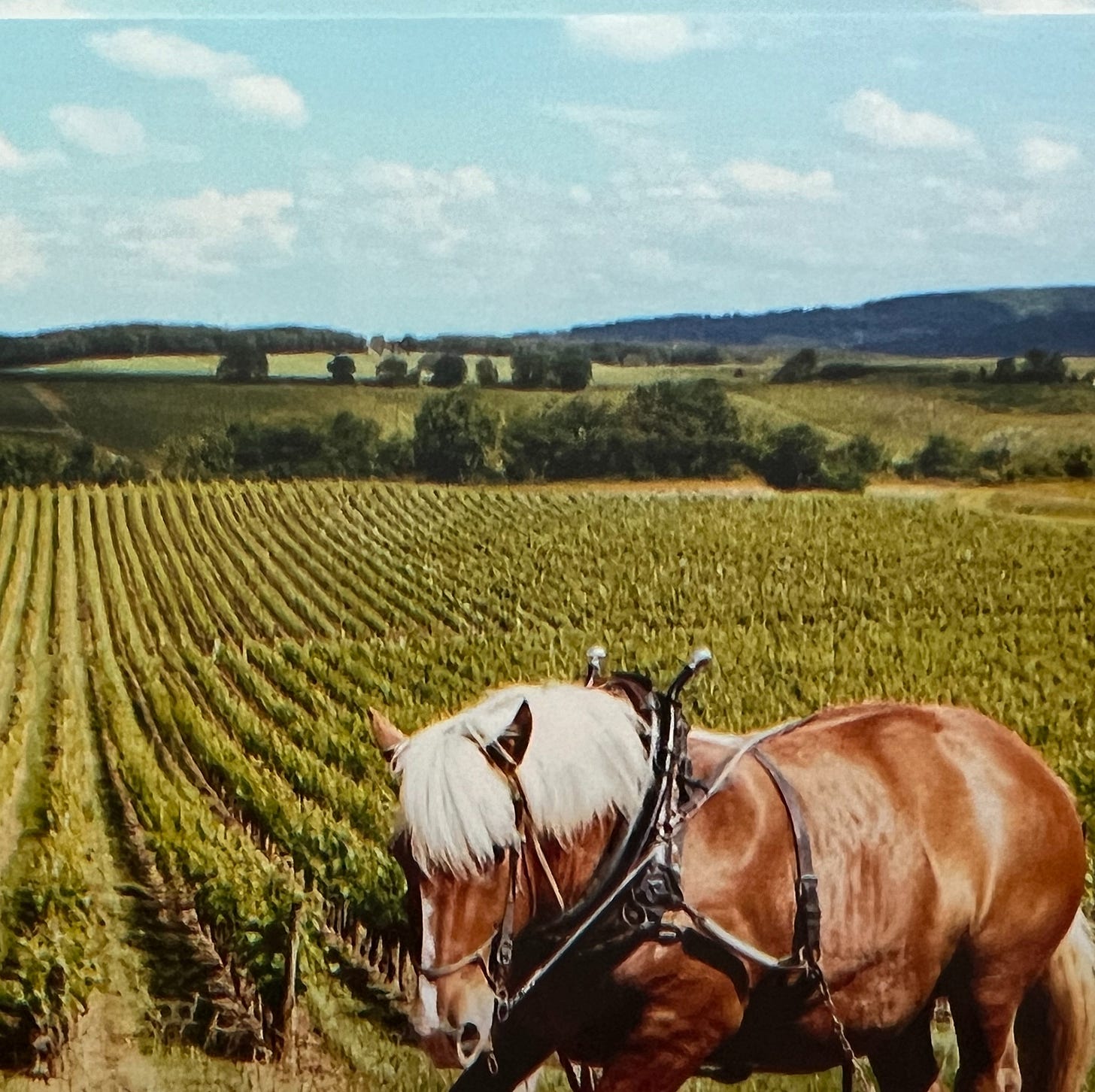
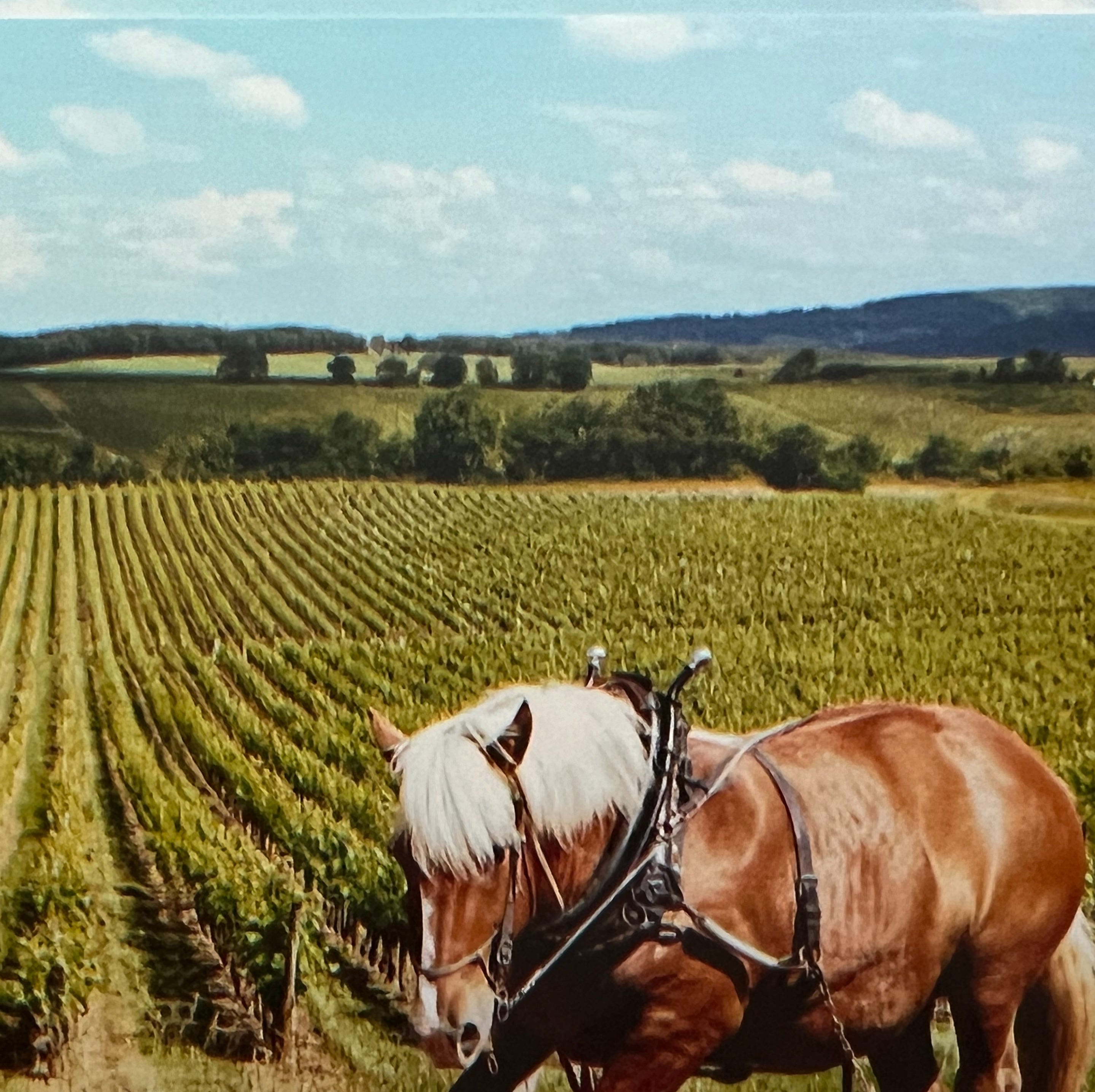
mâcon in summer on film Mâconnais: The southernmost region of Burgundy, the Mâconnais is often distinguished by its warmer, slightly more Mediterranean-influenced climate compared to the rest of the region. In the late spring of 2024, I drove to the city of Mâcon, at the heart of the sub-region, less than an hour from where I was living, but by the time I’d arrived at midday, I’d already shed two of the layers I’d come dressed in and had rolled the windows of my car down to let in the warm breeze. It’s these sorts of microclimates, the way the sun beats down differently over the southernmost slopes from the northernmost ones, that makes wine in Burgundy so interesting and that gives its wines such range.
With over 90% of its vineyards planted to Chardonnay, it is predominantly a white-wine-producing subregion. Small quantities of red wine are also produced, from both Pinot Noir and Gamay–given its proximity to Beaujolais, where Gamay is the dominant grape.Famous Appellations:
Pouilly-Fuissé
Saint-Véran
Pouilly-Vinzelles
Pouilly-Loché
Viré-Clessé
Classifications
In the early 20th century, a classification system emerged in Burgundy to distinguish its wines based on quality and prestige. Founded on a series of factors—including the specificity and historic reputation of vineyard sites, the origin of the grapes, and the position of parcels along the slopes—the system evolved to differentiate not only Burgundy’s wines from one another, but also the region itself from the rest of France. From most prestigious to most general, Burgundy’s classifications include Grand Cru, Premier Cru, Village, and Regional wines—each shaped, in large part, by the region’s rolling slopes. From Burgundy’s highest peaks, one can trace how, as the land dips and flattens, widening toward the horizon like the base of a pyramid, the wines become less specific and more approachable. In this way, Burgundy’s geography not only influences the character of its wines but also mirrors their hierarchy.
Grand Cru: the highest classification of a Burgundy wine, these account for 1% of all of the region’s wines and are therefore priced not only for their quality, but also for their rarity. These wines always come from single vineyard parcels at peak-mid slope where sun exposure and water draining is optimal.
Premier Cru: high-quality wines from single, often named vineyard sites (lieux-dits), made using grapes grown on mid-slope locations with favorable sun exposure. Similar in character to Grand Crus, these wines are less rare and generally more affordable.
Village Wines: wines made from grapes sourced within specific villages (often from multiple vineyard sites) and named after the commune they come from. Typically grown on slightly lower slopes, these wines are of excellent quality yet are more approachable and affordable than Premier and Grand Crus.
Regional Wines: This base level classification is also the mostly widely produced expression in Burgundy, often labeled simply as “Bourgogne Blanc” or “Bourgogne Rouge.” These wines can be made from grapes sourced from multiple vineyard sites across the broader region, sometimes spanning several appellations. They offer a general expression of Burgundy rather than the more specific character of Village or Cru wines.
Wow! 🤩 The amount of research and knowledge in this article is so great.
Did you get your Mum to like the article? All joking aside, great overview!